High school, AP and first-year university
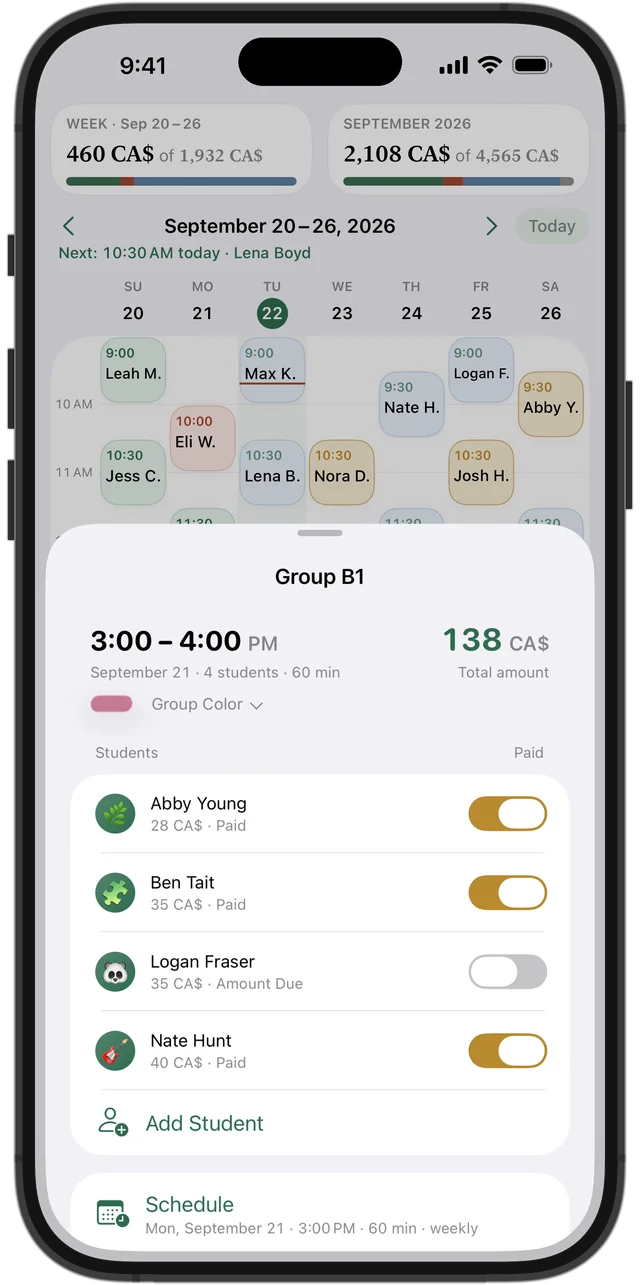
Your students sit different courses: Grade 11 and 12 chemistry in Ontario, Chemistry 20 and 30 in Alberta with its diploma exam, AP Chemistry in May, or a first-year university chemistry course. Keep the course and the weak topics in the student's note — “Chem 30, diploma in June, equilibrium” — and glance at it before each lesson.
High school lessons are usually an hour; university students often book 90 minutes before a midterm. Set the length once and the weekly series keeps it.
Review groups before finals
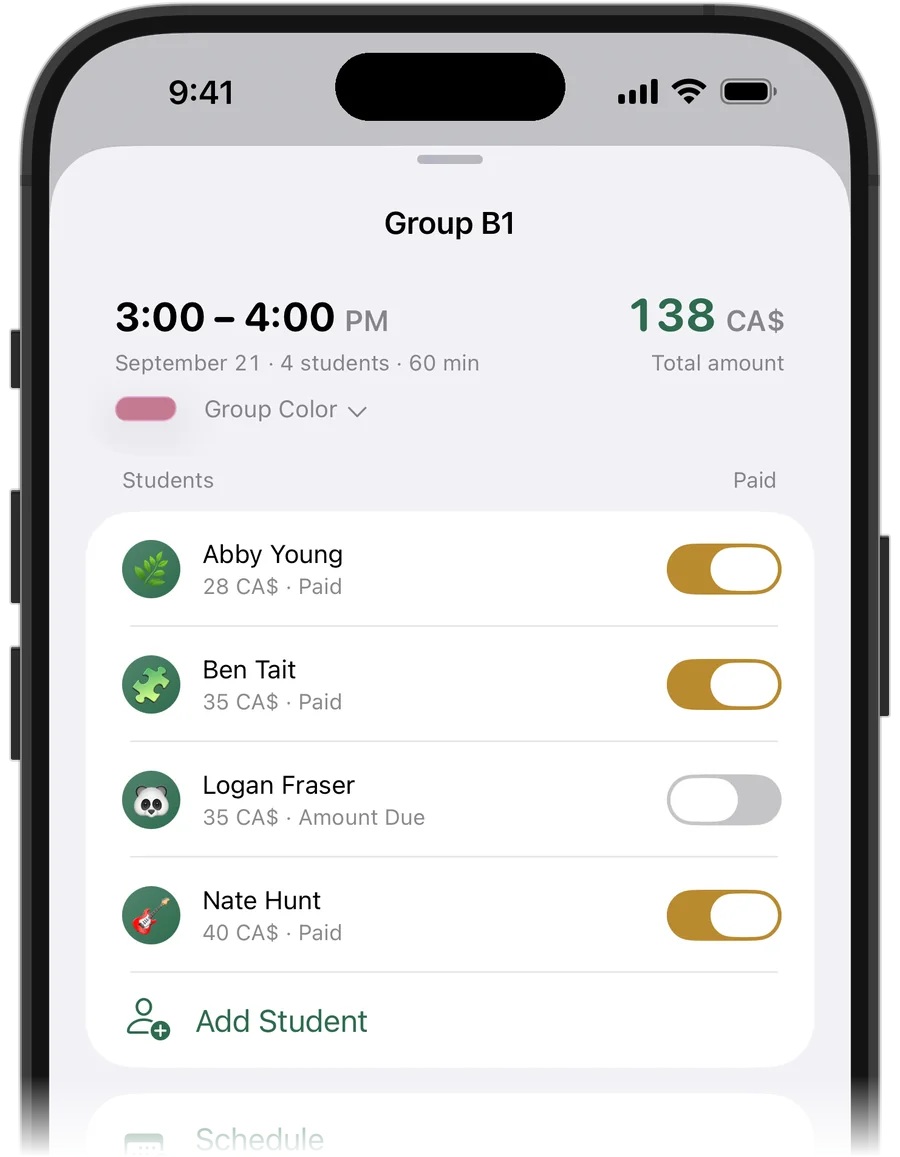
Three classmates reviewing for the same unit test or final can be one group lesson. Each pays their own price, and payments and absences are marked per student, so one absence doesn't touch the others' balances. Give the group a name and colour, such as “SCH4U Sunday,” and move the whole group in one step if the exam date shifts.
Try it free for 14 days · No card required. Subscribe only once the app has proven it's worth it to you.
Download on the App Store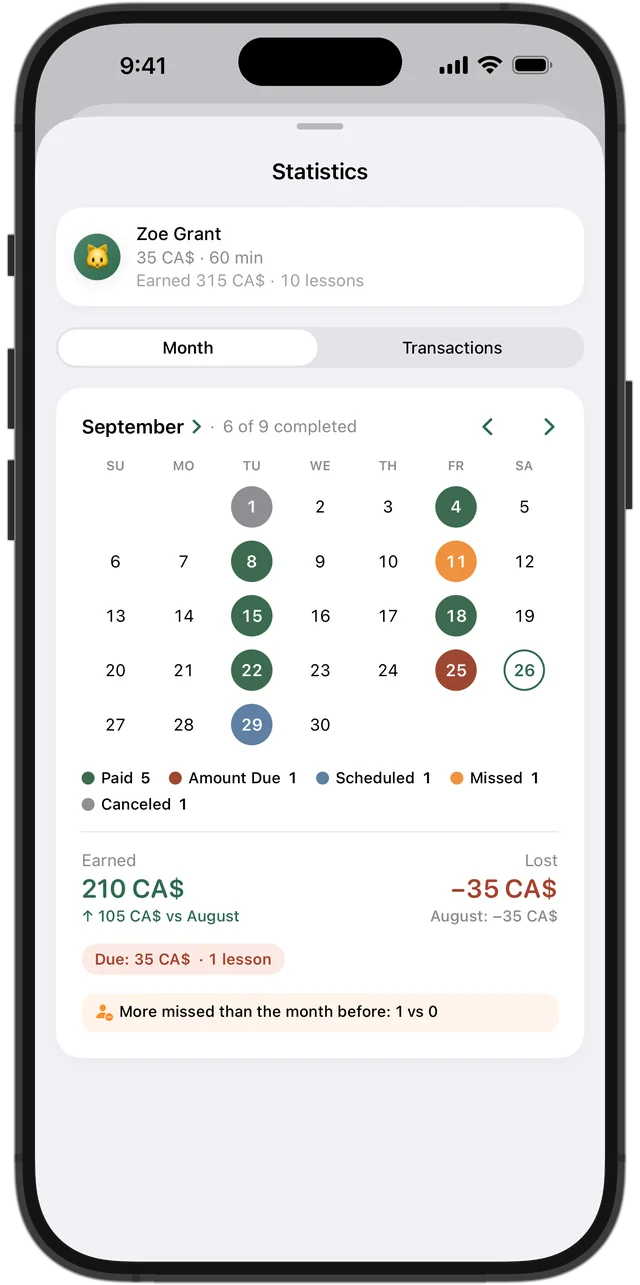
Pre-health students who need the mark
Students aiming for health sciences often step up to two lessons a week from January to June. Add a second weekday to their series with its own time. Their statistics show each month's lessons and a comparison with the previous month, so you can show a parent — or a university student paying for themselves — exactly how the spring went.
What exam season does to your income
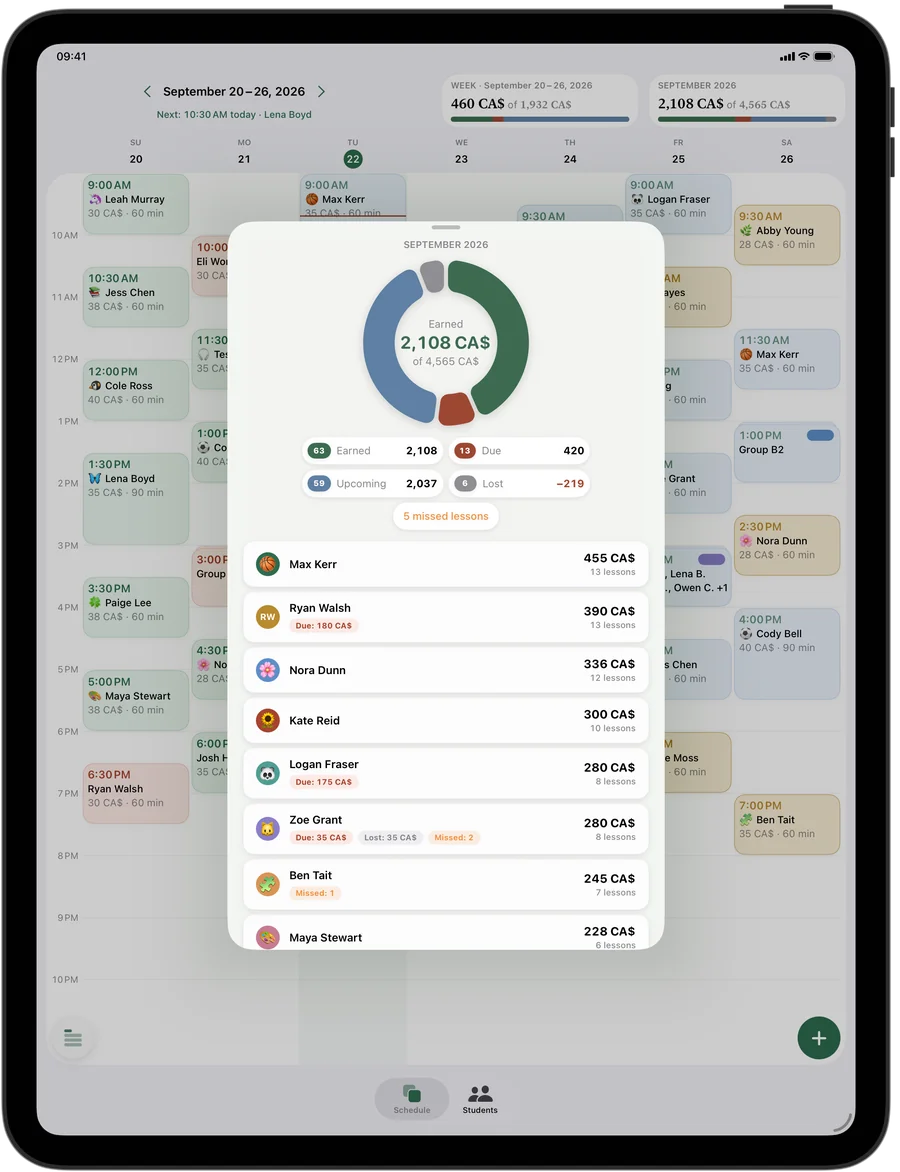
Chemistry tutoring peaks around January and June finals and nearly disappears in July. The month ring splits each month into earned, due, upcoming and lost income, and comparing months shows the real shape of your year — and what to set aside for summer.
Lost income is your cancelled lessons, so a week of cancellations during midterms becomes a number instead of a feeling.
iPhone, iPad, Mac — and your data stays yours
Squool syncs through your own iCloud between iPhone, iPad and Mac, with no account. Apple Watch shows the current and next lesson, and a reminder arrives before each one — just one per group lesson. The developer can't see your students or earnings. Full access is free for 14 days, no credit card needed.
Questions and answers
What app do chemistry tutors use for scheduling and payments?
Squool is one option made for private tutors on iPhone, iPad and Mac: a weekly schedule, group lessons, student balances and monthly income. It's free for 14 days.
Can each student in a chemistry review group pay a different price?
Yes. In a group lesson every student has their own price, and payments are tracked separately.
If one student skips the group session, is only that student charged?
Yes. Missed lessons and payments are marked per student.
Can I see which months I earn most from chemistry tutoring?
Yes. The month ring shows earned, due, upcoming and lost income, and you can compare months.
Is Squool available on Android?
No. Squool runs on iPhone, iPad, Mac and Apple Watch only.
Read also
Math & science tutors
For math, physics, chemistry, provincial exam and SAT tutors: weekly schedule, student balances, payments and income on iPhone, iPad and Mac.
Group lessons
How to price and track small group tutoring: an individual price per student, who paid, who missed, cancelling for one student or the whole group.
Tutoring income
How a private tutor in Canada can see real monthly income: what's earned, what's still due, what's planned and what cancellations cost. A method and an app.
Try it free for 14 days
No card required. Subscribe only once the app has proven it's worth it to you.
Download on the App Store